Tired of Losing Track of Your Packages in Busy Moments? This App Keeps Everything in Sync
Life gets chaotic—juggling work, family, and daily errands leaves little room for chasing delivery updates. You’ve probably missed a package, panicked before a guest arrival, or double-bought groceries. What if your phone could quietly keep tabs on every order, no matter your day’s chaos? I once missed a critical delivery during a family visit—until I found an app that adapts to my life, not the other way around. It’s not magic; it’s smart design that gets real life. Now, I don’t just track packages—I breathe easier knowing nothing slips through the cracks, even when my hands are full and my mind is elsewhere.
The Morning Rush: When Your Package Arrives Unnoticed
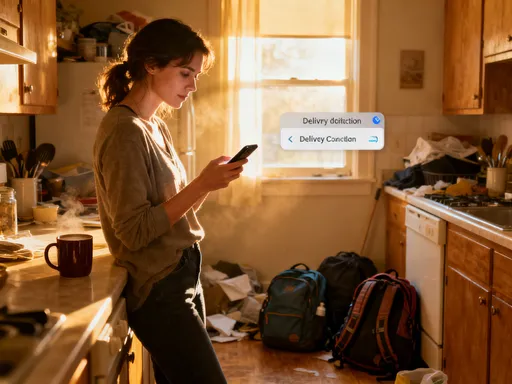
Mornings in my house feel like a well-rehearsed symphony of chaos. The alarm rings, someone spills cereal, the dog needs walking, and three different backpacks are missing. In the whirlwind, a delivery notification buzzes on my phone—but I don’t see it until hours later, when the package is already sitting unattended on my porch. This used to happen all the time. Sound familiar? You’re not alone. For years, I treated delivery alerts like background noise—until I discovered an app that doesn’t just ping me the second a package ships, but actually waits for the right moment to tell me.
Here’s how it works: the app learns your routine. It knows when you’re usually driving kids to school, when you’re in back-to-back meetings, or when your hands are covered in flour from baking pancakes. Instead of interrupting, it holds onto updates and delivers them at a time you’ve set—like after drop-off or during your coffee break. I’ve programmed mine to send summaries only between 9:00 and 9:30 a.m., and it’s made a surprising difference. No more frantic mid-morning texts to neighbors asking if they’ve seen my box. No more worrying that something valuable is sitting outside in the rain.
And it’s not just about timing. The app uses location-based triggers to help you stay aware without being overwhelmed. For example, if a delivery is scheduled while I’m still at home, I get a quiet heads-up. But if I’m already out, it waits until I’m on my way back to send a “Your package arrived” alert with a photo from the courier. That way, I don’t miss it, but I also don’t get distracted during the school run. One mom I spoke with—Sarah, from Ohio—told me she used to miss at least one delivery a month. Since switching to this smarter tracking system, she hasn’t missed a single one. “It’s like having a quiet helper who knows my rhythm,” she said. That’s exactly it. This isn’t technology shouting at you. It’s technology listening.
Travel Days: Tracking Orders Across Time Zones
Remember that sinking feeling when you land in a new city and realize your suitcase didn’t make it? Now imagine that same panic—but for a package you were counting on. A few years ago, I traveled to visit my sister for her birthday. I’d ordered a special cake to be delivered the morning of the party, but because I was on a flight with no Wi-Fi and my phone was on airplane mode, I didn’t see the delivery confirmation until I landed—eight hours later. The cake had been left outside, melted in the summer heat. It was heartbreaking, and completely avoidable.
That’s when I started looking for a tracking solution that could travel with me. What I found was an app that doesn’t just follow your packages—it follows you. When you enable “travel mode,” it automatically adjusts to your flight schedule. It pauses non-urgent notifications while you’re in the air, so you’re not bombarded with alerts the second you turn your phone back on. Instead, it compiles a clear, easy-to-scan summary: “3 deliveries made while you were away. 1 delayed. 1 arriving tomorrow.”
Even better, it uses automatic time-zone detection. So if a package is delivered at 10 a.m. your time, but that’s 4 a.m. local time where the delivery happened, the app adjusts the timeline so everything makes sense. No more confusion about whether something arrived “yesterday” or “three hours ago.” And if you’re staying at a hotel or a friend’s place, geofencing lets the app know you’re not at home—so it won’t send “out for delivery” alerts that just make you anxious while you’re miles away.
I now set up “away mode” before every trip. It asks me for my travel dates, destination, and preferred check-in times. Then, like a personal assistant, it only interrupts me if something urgent comes up—like a delivery attempt that failed or a package rerouted. One user, Maria, told me she uses it when visiting her parents in another state. “I don’t want to worry about my home deliveries while I’m gone,” she said. “But I also don’t want to come back to a pile of missed attempts. This app gives me both—peace of mind and control.”
Shared Households: One Delivery, Many Lives
In a household with more than one adult, package management can turn into a game of telephone. “Did you get the baby monitor?” “I thought you were watching for it.” “Wait, did it say it was delivered?” We’ve all been there. When my nephew was born, my sister and her partner nearly missed the delivery of his first car seat because both assumed the other was handling it. The package was left at the door, and a neighbor ended up taking it in—thankfully. But it was a wake-up call: in a busy home, no one should be the sole keeper of delivery information.
That’s where shared dashboards make all the difference. The app I use allows multiple family members to be added to a single account. Everyone gets real-time updates, but with customizable roles. For example, my sister set it up so only she gets alerts during nap time—because she’s the one most likely to be home. Her partner gets summaries in the evening. They can both see the delivery map, photo proof, and estimated window, so there’s no guessing, no blaming, no last-minute panic.
The technology behind this is surprisingly simple but powerful. Each user has their own login, but they’re linked to a shared “home profile.” Permissions can be set so that only certain people get notified for high-value items, or so kids don’t see delivery alerts for surprise gifts. The app syncs across devices instantly, so if one person marks a package as “received,” it updates for everyone. It’s like having a family bulletin board—but one that lives in your pocket and updates itself.
I’ve seen this work wonders in homes with roommates, blended families, and even elderly parents living nearby. One woman, Linda, uses it to help her mom keep track of medication deliveries. “She doesn’t always check her phone, but her caregiver does,” Linda explained. “Now, we both get alerts, and we can confirm delivery together.” It’s not just about convenience—it’s about connection. When everyone’s on the same page, small stresses fade away, and trust grows.
Last-Minute Events: When Guests Are Coming and Supplies Aren’t
Life doesn’t run on a schedule—and neither do our gatherings. A cousin calls to say she’s coming over with her new baby. Your book club decides to move the meeting to your house. These moments are beautiful, but they come with a side of panic: Did I order enough snacks? Is the wine here yet? What if the flowers don’t arrive? I’ll never forget the time I hosted a surprise birthday dinner and realized—two hours before guests arrived—that my order of specialty cheeses and crackers was delayed. My heart dropped. I was about to run to the store when my app chimed with a delay alert—and a suggestion.
It didn’t just tell me the bad news. It said, “Your delivery is delayed by 3 hours. Switch to same-day pickup at [local store] and save 15%?” I clicked yes, drove five minutes down the road, and picked it up myself. The dinner was saved. That moment taught me something important: the best tech doesn’t just inform you—it helps you fix it.
This app uses predictive delivery windows based on traffic, weather, and carrier performance. If it sees a delay coming, it doesn’t wait until the last minute to tell you. It gives you a heads-up—sometimes 24 hours in advance—so you can adjust. And because it integrates with local retailers, it can suggest alternatives: pickup locations, substitute items, or even delivery rescheduling with one tap.
One user, Diane, told me she uses this feature every time she hosts a holiday meal. “I plan everything weeks ahead,” she said, “but you never know what’ll go wrong. Last Thanksgiving, my pie crusts were delayed. The app suggested a bakery five minutes away that had them in stock. I picked them up on my way home, and no one ever knew.” That’s the power of adaptive technology—not just tracking, but problem-solving. It turns stress into solutions, and chaos into calm.
Urban Living: Navigating Noise, No Wi-Fi, and No Doorman
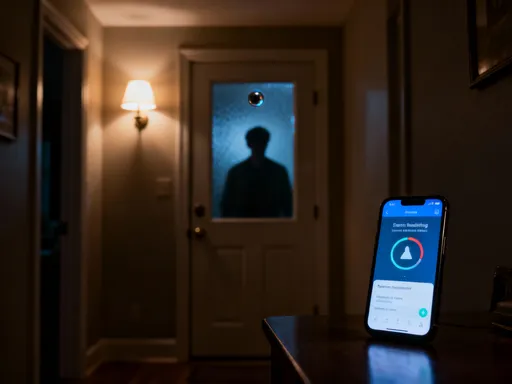
If you live in a city apartment, you know the struggle: your phone buzzes, but you’re in the shower. The delivery person rings the intercom, but the speaker is broken. You check the app later—too late. Your package is gone. In dense urban environments, delivery challenges multiply. Poor Wi-Fi in basements, noisy buildings, and no secure drop-off points make it easy for packages to disappear or go unnoticed.
That’s why I appreciate how this app adapts to the city lifestyle. It offers offline sync, so even if you lose connection in your building’s elevator or basement gym, your delivery status stays updated the moment you’re back online. It also supports vibration-only alerts—perfect for when you’re in a meeting or don’t want to disturb others. And for those crucial moments, it enables “delivery proof”: couriers can upload a photo of your package at your door, so you know it arrived safely—even if you didn’t hear the knock.
I spoke with James, who lives in a high-rise in Chicago. He used to miss half his deliveries. “The intercom never works, and I work from home with headphones on,” he said. “Now, I get a strong vibration alert, a photo, and a map pin showing exactly where it was left.” He also uses “silent mode” during work hours, so he’s not interrupted, but still gets a summary at noon and 5 p.m.
The app even integrates with building management systems in some newer apartments, allowing couriers to leave packages in secure lockers. If your building has one, the app guides the delivery person there automatically. For those without that luxury, it offers “safe spot” suggestions—like your building’s front desk or a neighbor’s apartment—based on your past preferences. In cities where every square foot counts, this kind of smart, context-aware support makes all the difference.
Rural and Remote: When the Mail Comes Once a Week
Now, let’s talk about life outside the city. If you live in a rural area, you know that delivery isn’t just unreliable—it’s often unpredictable. The mail comes once a week. Cell service cuts out in the valley. Packages sit at the end of a long driveway, exposed to weather and wildlife. For years, my friend Claire, who runs a small farm in Vermont, would lose packages to rain, raccoons, or simply not knowing they’d arrived. “I’d drive ten miles to town just to check the post office,” she said, “only to find out my order was sitting at home the whole time.”
That changed when she started using an app with extended offline support and satellite-based location tracking. Even when her phone has no signal, the app stores delivery updates locally and syncs them when connection returns. It also works with local pickup hubs—like general stores or post offices—so if a courier can’t reach her remote driveway, she gets a notification that her package is waiting at the nearest drop-off point.
What I love is how it supports low-bandwidth modes. On days when her internet is slow, the app still loads essential info: delivery status, estimated arrival, and courier notes. She can also share tracking links with neighbors, so if she’s not home, someone nearby can grab the package and hold it. “We’ve created a little network,” she told me. “It’s not just about tracking—it’s about community.”
The app also sends early warnings if a delivery is scheduled on a day with severe weather, so she can reschedule or arrange for someone to collect it. For rural users, this kind of foresight is priceless. It turns isolation into connection, and uncertainty into reliability. Technology that works with the landscape, not against it, is technology that truly serves.
Peace of Mind: How Knowing Brings Calm
At the end of the day, this isn’t just about packages. It’s about peace. It’s about walking into your home after a long day and knowing—without checking, without guessing—that everything is where it should be. It’s about hosting a dinner without last-minute store runs. It’s about trusting that your baby’s supplies arrived safely, even when you weren’t home to sign for them.
What I’ve learned is that the best technology doesn’t demand your attention—it gives you back your time. It doesn’t add to the noise—it helps you find the quiet. The app I use has become a quiet companion in my daily life, one that understands my rhythm, my worries, and my need for control. It doesn’t make life perfect. But it makes it manageable.
I think about all the small stresses it’s eliminated: the missed deliveries, the double purchases, the anxious calls to couriers. Each one was a tiny crack in my calm. Now, those cracks are sealed. I’m more present with my family. I’m less reactive. I breathe deeper.
And that’s the real promise of technology—not flash or speed, but support. Not complexity, but clarity. The right tools don’t complicate your life. They simplify it. They don’t make you dependent. They make you free.
So if you’re tired of chasing updates, missing deliveries, or feeling like you’re always one step behind—know this: there’s a better way. A way where your phone works for you, not against you. Where information comes to you at the right time, in the right way. Where you’re not just tracking packages—you’re reclaiming your peace.
Because life is full enough. You don’t need one more thing to worry about. You need something that helps you let go. And sometimes, that something fits right in your pocket.