I just need a minute to myself – How a family security network gave me back my personal space
You’ve said it before: “I just need a minute to myself.” But in the constant rhythm of family life—meals, schedules, check-ins—it’s easy to feel like your own time has vanished. What if the very system designed to keep your family safe could also protect something just as precious: your personal space? I didn’t expect my family’s security network to become a quiet ally in reclaiming breathing room—until it did. It started with a simple realization: safety doesn’t have to mean constant surveillance. And peace of mind shouldn’t come at the cost of peace within yourself.
The Constant Ping: When Family Safety Feels Like Surveillance
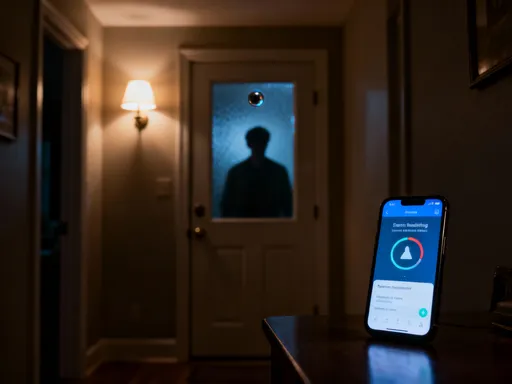
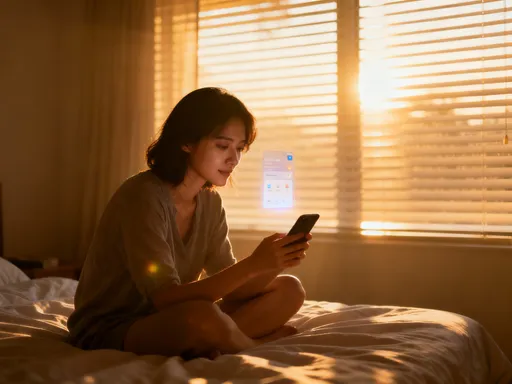
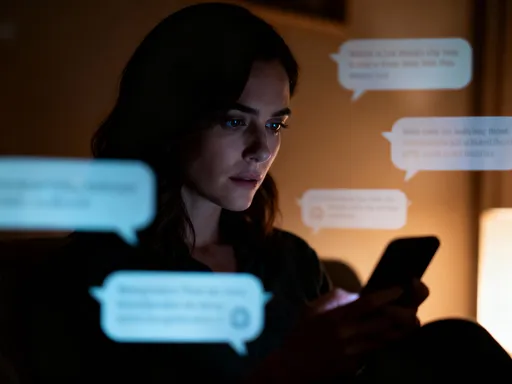
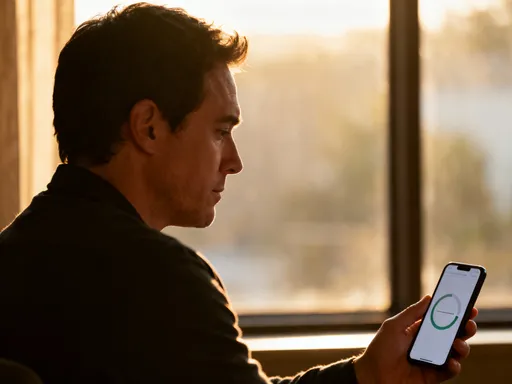
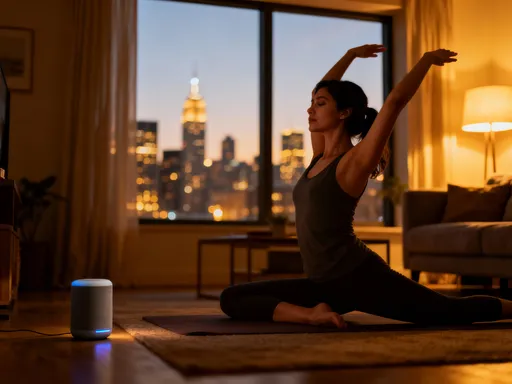
Remember that Sunday morning when you finally poured yourself a second cup of coffee, sat by the window, and took a deep breath? And then—ping. The front door unlocked. Your teenager was home from a friend’s house. You didn’t need to know that right then. But the alert lit up your phone anyway, pulling you back into duty mode before you’d even finished stirring your honey. That’s the paradox so many of us face: our family security systems were meant to give us freedom, but sometimes they feel more like digital leashes. Motion alerts from the backyard during yoga. Camera notifications while you’re on a work call. Even the garage door opening triggers a buzz in your pocket. It’s not that we don’t care. Of course we do. But when every little movement in the house demands our attention, it starts to feel less like protection and more like pressure.
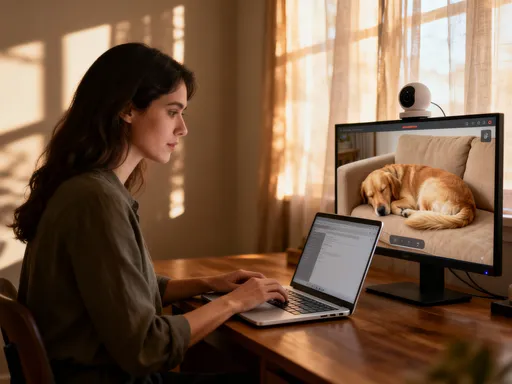
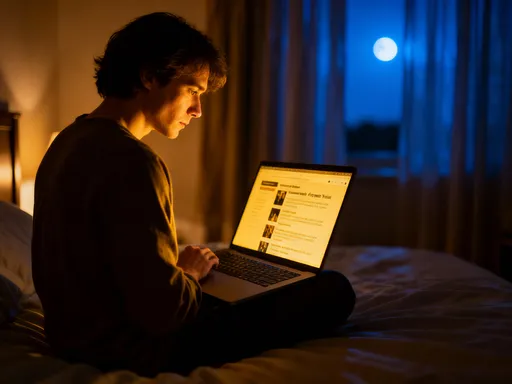
I used to think I just had to tough it out. That being a good mom, a reliable partner, meant always being reachable, always responsive. But over time, the constant pings chipped away at my focus, my calm, even my sense of self. I’d find myself scrolling through camera feeds out of habit, not necessity. Was the dog okay? Did the kids forget to lock the side gate? Was that a shadow or a squirrel? The irony wasn’t lost on me: a system meant to reduce anxiety was quietly increasing it. I wasn’t sleeping better. I wasn’t feeling safer. I was just… more connected. And connection, without boundaries, can feel a lot like exhaustion.
It took a weekend away—yes, a rare solo trip to visit an old friend—where I left my phone behind for a few hours, to realize how much lighter I felt without the buzz of alerts. When I returned, I looked at my security app differently. Not as a lifeline, but as a tool I could shape. Because here’s the truth: most of us use these systems on default settings. We install them for safety, set them up once, and forget to ask: is this still serving me? Is it giving me peace, or just more to manage?
The Hidden Feature No One Talks About: Quiet Zones
Have you ever heard of “quiet zones” in your security system? I hadn’t—until I stumbled on the setting while trying to mute the basement camera during laundry day. Turns out, many modern home security platforms include the ability to create customized quiet zones: areas of your home or times of day when certain alerts are automatically silenced. Not disabled—just paused. It’s like putting your home’s nervous system on a gentle timeout. And once I discovered it, everything changed.
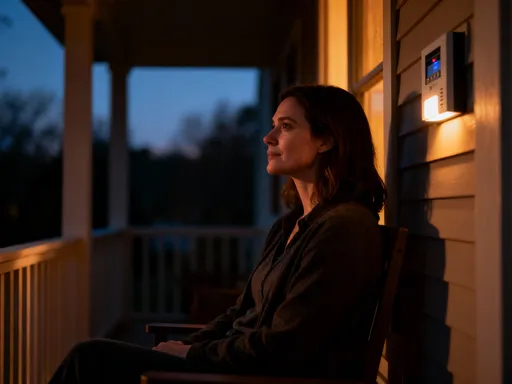
I started small. I turned off motion alerts from the garden patio between 6 p.m. and 9 p.m.—my favorite time to sit outside with a book and a cup of tea. No more jumping when the neighbor’s cat wandered by. Then I set my home office to “quiet mode” after 8 p.m., so late-night fridge raids or homework trips wouldn’t trigger camera pings on my phone. It felt almost rebellious, like I was reclaiming a corner of my home that belonged only to me. But really, I wasn’t compromising safety. I was just choosing when and how I wanted to be informed.
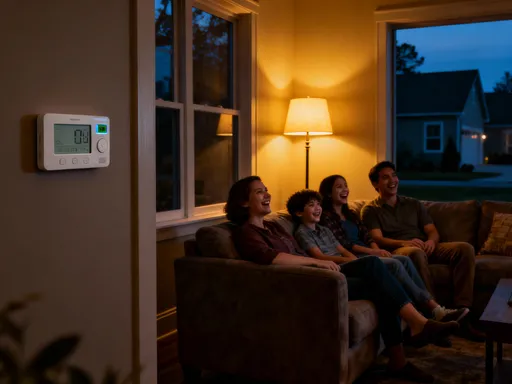
One evening, I took a walk around the block after dinner—something I hadn’t done in months without my phone glued to my hand. This time, I left it charging on the kitchen counter. I walked slowly, listened to the crickets, watched the sky turn purple. And when I got back, no flood of alerts waited for me. The house was fine. My kids were fine. And I felt… present. That’s when it hit me: quiet zones aren’t just about silencing notifications. They’re about creating emotional space. They’re a way of saying, “I’m still here. I still care. But right now, I need to be with myself.” And that’s not selfish. It’s sustainable.
Shared Access, Separate Boundaries: Managing Digital Togetherness
We love that our family security systems let everyone stay connected. My husband can check the front camera from his office. My older daughter can make sure the dog got let out before school. It’s convenient. It’s helpful. But when everyone has access to everything, it can start to blur the lines between care and intrusion. I remember one afternoon, deep in a work meeting, my phone buzzed—my husband had just pulled up the living room camera “to see what the kids were up to.” I wasn’t upset with him, but I did wonder: did I need to know that? Did he? Was this curiosity, or a quiet habit of monitoring?
That moment sparked a conversation we hadn’t had before: How do we share access without sacrificing privacy—for ourselves or our kids? We realized we didn’t have to all be on the same page all the time. So we adjusted our settings. Now, my husband receives all alerts—he likes being the “first responder” if something comes up. I’ve opted into only emergency notifications during work hours, plus a daily summary at 6 p.m. My daughter can view camera footage but can’t save or share it. These small changes didn’t weaken our system. They strengthened it. Because now, our digital togetherness feels intentional, not automatic.
It’s like setting house rules, but for your tech. One friend told me she and her partner have a “no cameras during date night” rule—even if they’re at home. Another mom uses a shared family calendar to mark her “do not disturb” hours, so her teens know not to text unless it’s urgent. These aren’t signs of disconnection. They’re acts of respect. And when kids see that even parents need space, it teaches them something powerful: that privacy isn’t secrecy. It’s self-respect.
The Psychology of Safety and Space
Safety isn’t just about locked doors and motion sensors. It’s also about how we feel inside. And here’s what science quietly confirms: constant monitoring—even when well-meaning—can keep our nervous systems on high alert. When we’re always checking, always ready to respond, our brains don’t get the signal that it’s safe to relax. It’s like living in a state of low-grade emergency, even when everything is fine. And over time, that wears us down.
Psychologists talk about the importance of “predictable downtime”—regular, uninterrupted moments when we can disconnect without guilt. These are the times when our minds reset, when creativity returns, when we remember who we are outside of our roles. But in a world of endless notifications, those moments are rare. That’s why tech boundaries aren’t just convenient—they’re essential for mental well-being. When I started using quiet hours and personalized alerts, I noticed something subtle but real: I was less reactive. I wasn’t jumping at every sound. I felt more centered, more like myself.
One study on digital well-being found that people who set tech boundaries reported lower stress and higher life satisfaction—even if they still used the same devices. The difference? They felt in control. And that’s the key. It’s not about rejecting technology. It’s about designing it to serve us, not the other way around. When your security system respects your need for space, it doesn’t make you less safe. It makes you more whole. Because true safety includes the freedom to breathe, to think, to just be—without having to prove you’re paying attention.
Practical Setup: How to Customize Your System in 20 Minutes
Ready to make your system work for you? You don’t need to be a tech expert. In about 20 minutes, you can customize your family security network to protect both your home and your peace. Let’s walk through it together, like I’m sitting at your kitchen table with my laptop open.
First, open your security app. Whether it’s Ring, Nest, Arlo, or another brand, the basics are similar. Tap into the settings menu—usually a gear icon. Look for “Notifications” or “Alerts.” Here, you’ll see a list of devices: cameras, doorbells, motion sensors. Start by muting non-essential alerts. For example, turn off motion notifications from areas that don’t need constant monitoring, like the backyard after dark or the hallway at night. You can always keep the alerts active for front doors or garages.
Next, set up quiet hours. Most apps let you schedule “do not disturb” periods. Choose times when you want uninterrupted personal space—say, 7 p.m. to 9 p.m. for family time, or 10 p.m. to 7 a.m. for sleep. During these hours, only emergency alerts (like a door forced open) will come through. Everything else waits.
Now, explore geofencing. This feature uses your phone’s location to trigger automatic modes. For example, when your phone leaves the house, the system can switch to “away” mode and send you arrival/departure alerts. When you return, it can silence non-urgent notifications, so you’re not bombarded the second you walk in. It’s like your home learning your rhythm.
Finally, customize user profiles. If your partner or teen has access, go to the “Family Members” or “Shared Users” section. You can set different alert preferences for each person. One parent might want all alerts. Another might prefer only emergencies. You can even disable camera viewing during certain hours for specific users. It takes a few taps, but it makes a world of difference. And don’t forget to save your changes. That’s it—you’ve just made your tech work for your life, not against it.
When the System Works Too Well: Reconnecting on Your Terms
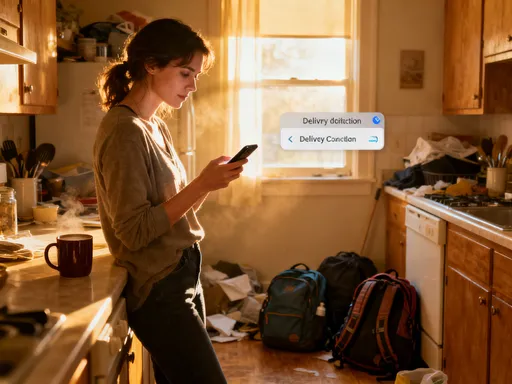
Here’s the unexpected twist: the more I stepped back, the more my family stepped up. When my kids knew I wouldn’t be glued to the camera feed, they started texting me only when it mattered. “Mom, can you approve the pizza delivery?” or “The dog threw up—should I call the vet?” Not every little thing. Just the real things. And because I wasn’t overwhelmed by constant updates, I could respond with more patience, more presence.
One night, I was in the middle of a quiet bath—candles, music, the whole rare ritual—when I heard a soft knock. It was my daughter, holding a note: “Dad’s working late. Can you check the garage door? I think I left it open.” She didn’t text. She didn’t buzz the intercom. She came to me. And in that moment, I realized something beautiful: by creating space through technology, I had opened the door to deeper connection in real life. Because now, when we check in, it’s not out of habit. It’s out of trust.
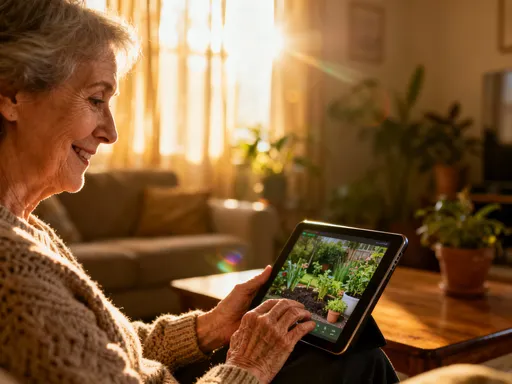
Another friend shared a similar story. She set her bedroom as a “no alerts” zone and told her family, “If you need me, come find me.” At first, her son kept texting. But after a few days, he started knocking. “It made me feel more needed,” she said, “not less. Because now, when he comes to me, it means something.” Technology, when used with intention, doesn’t replace human connection. It can actually protect the moments worth connecting for.
Rethinking Family Tech: From Control to Care
We often think of family security systems as tools of control—ways to monitor, manage, and make sure everything is “okay.” But what if we saw them differently? What if, instead of symbols of oversight, we treated them as expressions of care—care that includes space, trust, and respect for each person’s need to breathe?
The most powerful feature of any security system isn’t the camera resolution or the motion sensitivity. It’s the ability to customize it so that everyone in the family feels both safe and seen. When you can step away without guilt, when your kids learn to respect your quiet time, when your partner knows they don’t have to report every arrival—those are the moments when technology fades into the background, and life comes forward.
I still say, “I just need a minute to myself.” But now, I believe it’s possible. Not because my family needs me less, but because our tools help us honor what we all need more: safety, yes—but also silence. Connection, yes—but also space. And the quiet confidence that we can protect our home without losing ourselves in the process. That’s not just smart tech. That’s smart living. And it’s a gift we can all give ourselves—one quiet zone at a time.